← Back to homepageTherapy and small steps
Behind every small step Alex takes are many hours of work. Therapy is not an extra part of our life – it is an investment in his future independence.
Rehabilitation stays
Alex has completed 14 intensive week-long rehabilitation stays in Poland. A typical week includes around 15–20 hours of therapy. This is not a holiday: I organise travel, accommodation, the daily schedule and both children on my own and stay with Alex during therapy. More intensive stays are planned for November 2026, February 2027 and May 2027.
Physiotherapy
We work on posture, walking, balance, coordination and muscle function. Foot alignment problems, orthotic insoles, knee and hip pain and the effects of many operations mean he needs continuous work.
Occupational therapy
Occupational therapy supports hand function, fine motor skills, hand-eye coordination, independence and sensory processing.
Speech therapy
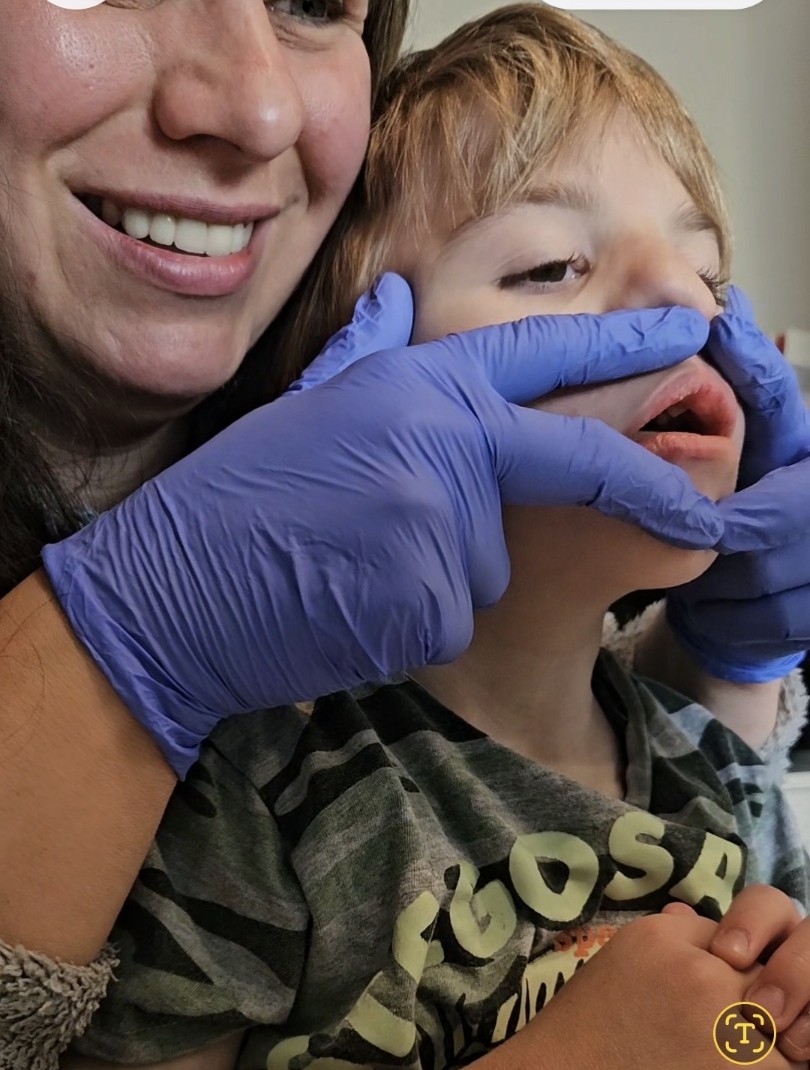
After cleft surgery, many procedures and with hearing impairment, speech development requires enormous work. Alongside weekly in-person therapy we use online speech therapy, and I continue exercises and massage at home every day.
Hippotherapy
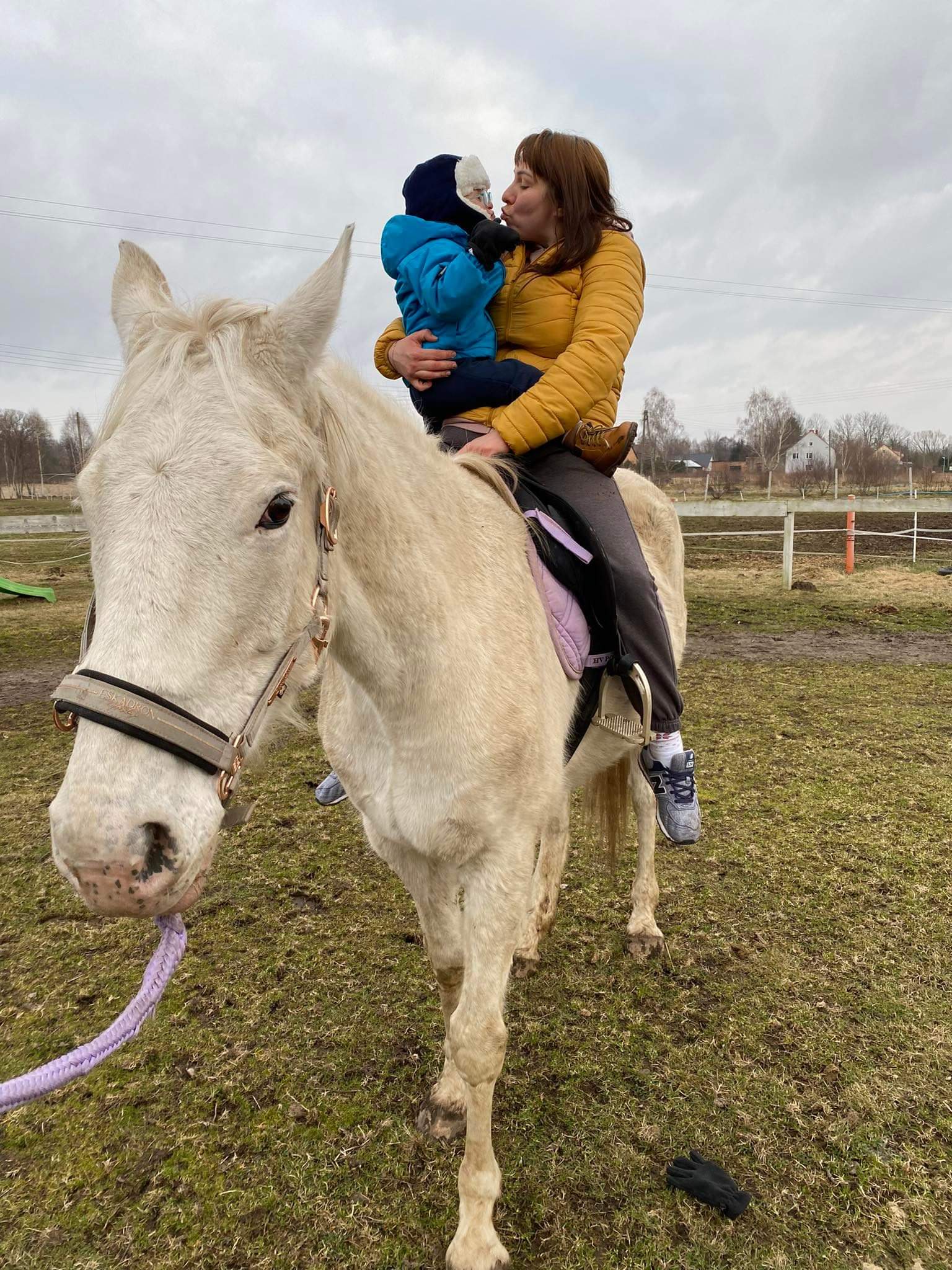
The horse’s three-dimensional movement is used to work on balance, trunk control, coordination and motor function. Alex attends twice a month and we pay privately.
Osteopathy
After many operations and with numerous scars, we also use osteopathy as a complementary therapy. Alex has appointments twice a month and we cover the cost privately.
SSP, SAS and Johansen
We also use listening programmes with specially processed sound. This work requires quiet, consistency and commitment.
Cochlear Implant Days and KBO Munich
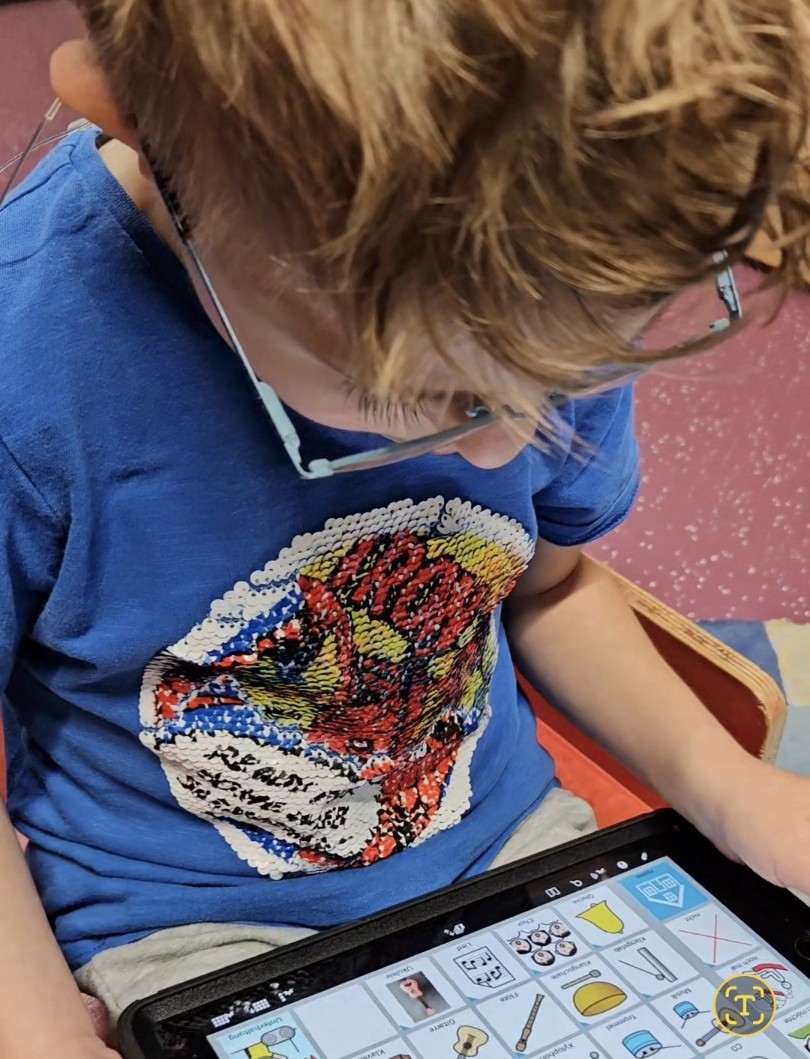
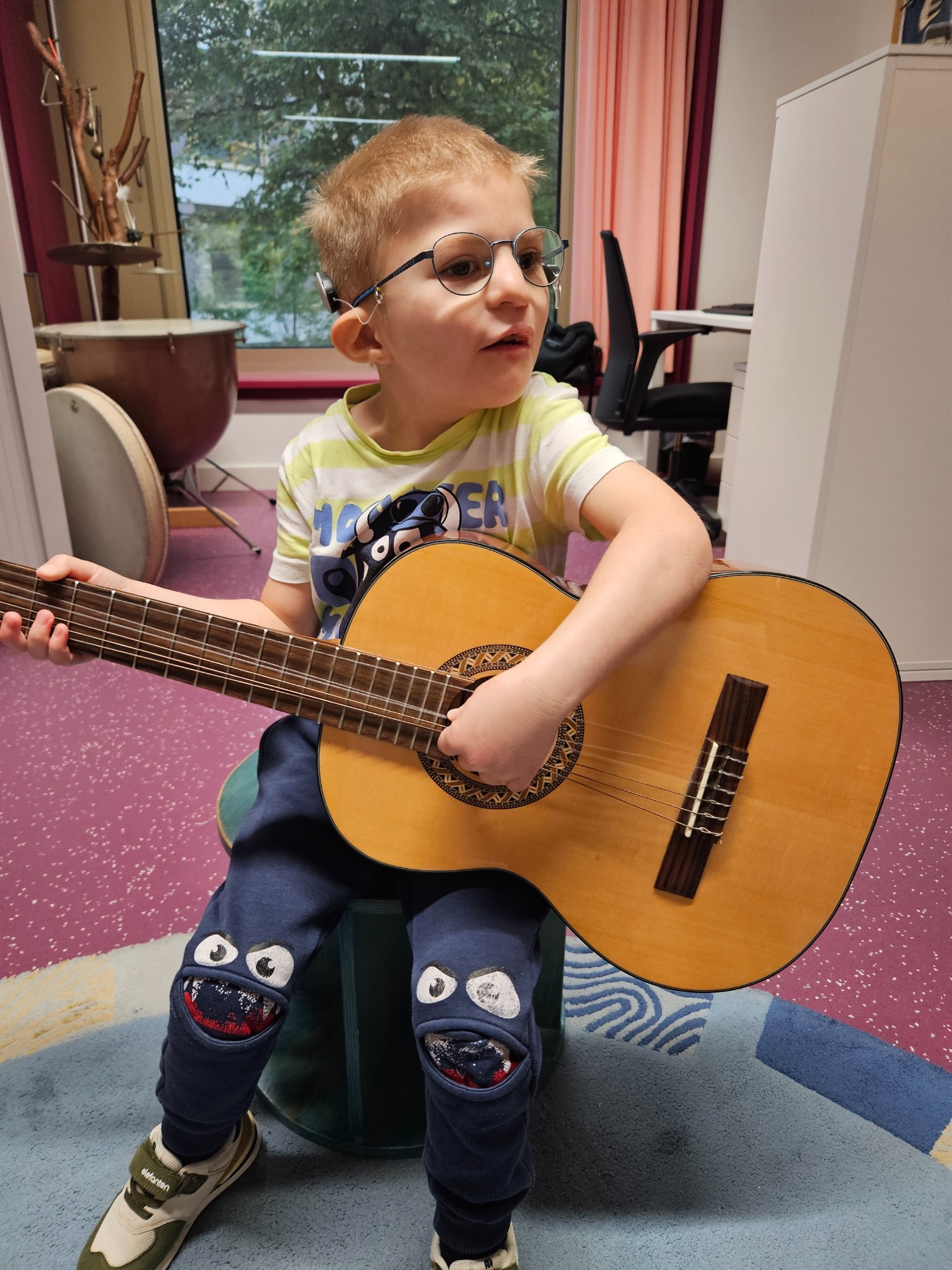
Once a year Alex attends three Cochlear Implant Days with hearing tests, CI programming and therapy. He has also completed a four-week rehabilitation stay in Bavaria and a two-week KBO stay focused on augmentative communication.
Dennison exercises and bilateral integration
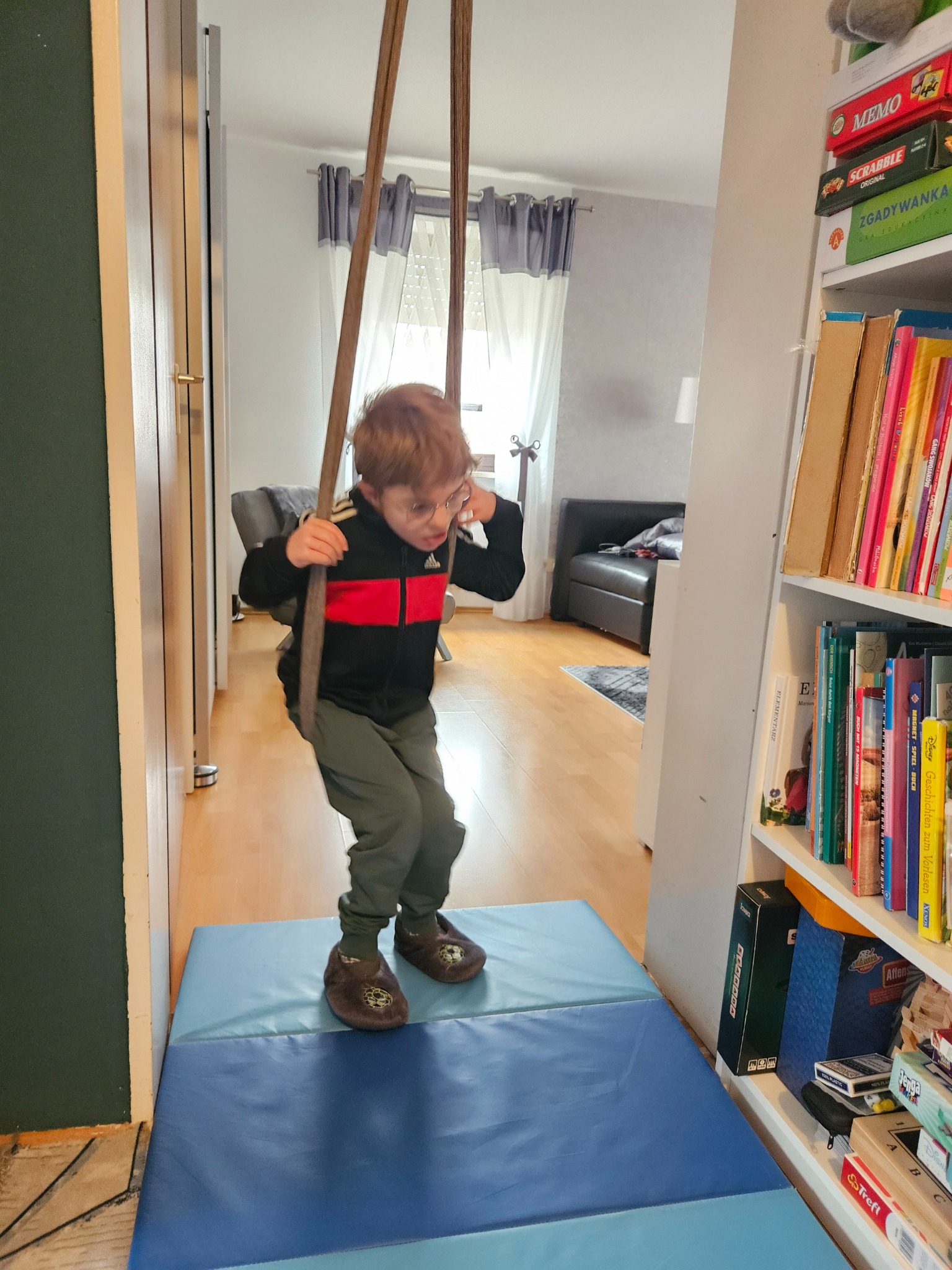
I am constantly looking for new approaches and therapy elements that may support Alex’s development. I do not expect one method to be the answer to everything. I watch how Alex responds, speak with professionals and add new exercises when they seem useful for a particular skill. This includes exercises inspired by Dennison’s Brain Gym and bilateral integration. They involve both sides of the body, crossing the midline, alternating movements and hand-eye coordination. With Alex, we use them mainly as practical work on coordination, body awareness, attention to a task and motor planning. We also practise at home. Some exercises may look like play, but for Alex they can require considerable concentration, planning and effort. The broad claims made for Brain Gym regarding learning and cognitive function are not strongly supported by scientific evidence, so I regard these exercises as a complement rather than a replacement for physiotherapy, occupational therapy or other professionally guided therapies. What matters to me is practising specific skills and continuing to give Alex new opportunities to become as independent as possible.
Therapy at home
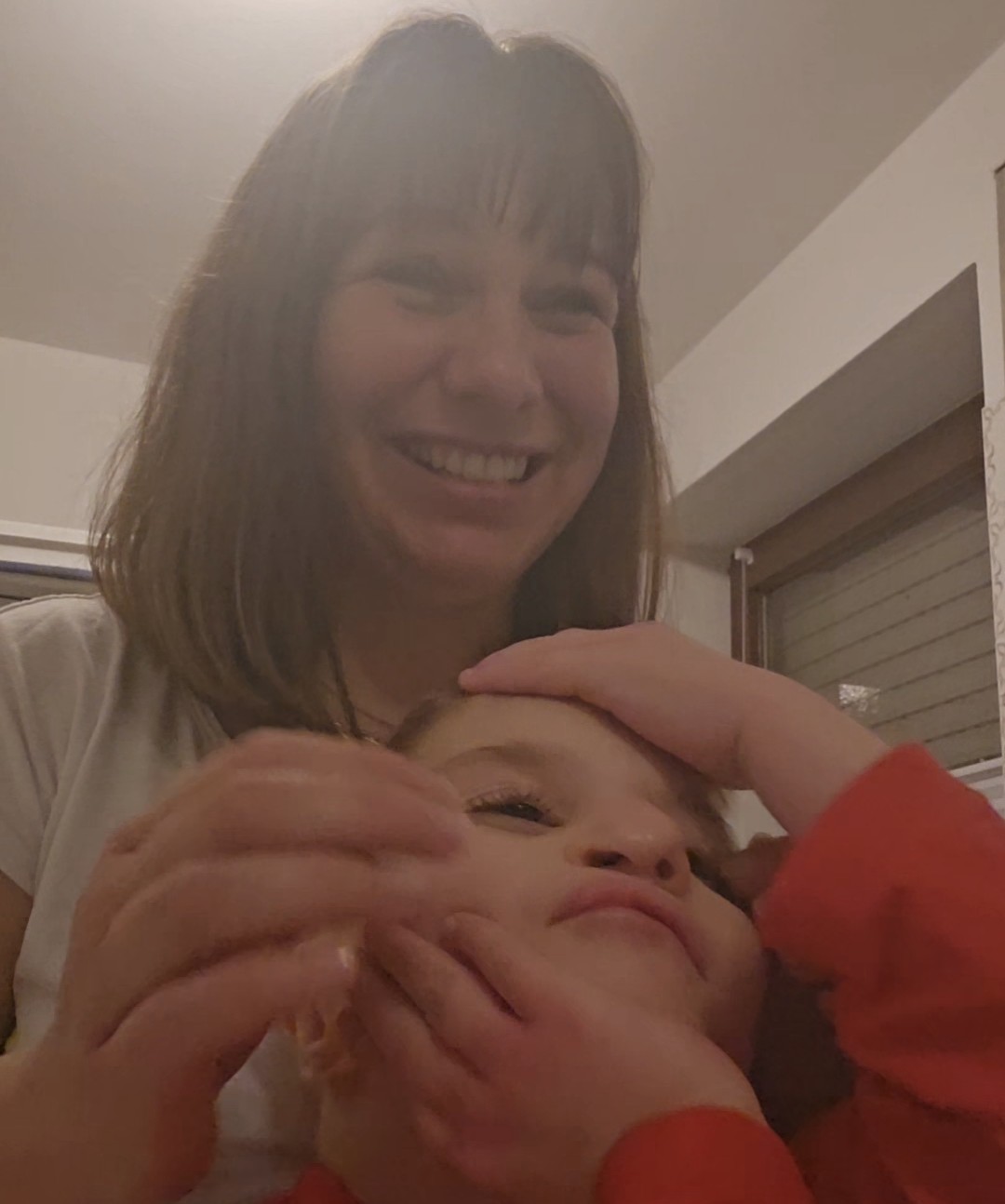
Therapy does not end at the clinic door. Alongside work, household tasks and family life, I organise every appointment and trip on my own and work with Alex at home every day.



.jpg)

_resized.jpg)